When architects specify materials for LEED-certified projects, signage rarely leads the conversation. It tends to get resolved late, treated as a finishing detail rather than a material decision. That is where things can quietly go wrong.
LEED signage requirements touch multiple credit categories, and the materials used to produce those signs can either contribute toward certification or work against it. Novacryl® photopolymer substrates from Nova Polymers were developed with those criteria in mind. This post breaks down what architects need to know, where Novacryl fits, and what documentation is available to support your project teams.
What LEED Signage Requirements Actually Cover
LEED does not have a single “signage credit.” The requirements that affect signage are spread across several categories, and which ones apply to your project depends on the rating system you are pursuing and the scope of your specification.
The categories most relevant to architectural signage materials are:
- Indoor Environmental Quality (EQ) Credit: Low-Emitting Materials. This is the credit that directly affects material selection. Under LEED v4 and v4.1, interior building products must meet VOC emissions limits, tested against the California Department of Public Health (CDPH) Standard Method. Third-party certifications such as UL GREENGUARD Gold, SCS Indoor Advantage Gold, and Intertek Clean Air GOLD satisfy the General Emissions Evaluation. Products used as interior finishes, coatings, and substrates all fall within this credit’s scope.
- Materials and Resources (MR) Credit: Recycled Content. LEED rewards projects that incorporate materials with documented post-consumer or pre-consumer recycled content. For signage substrates, this means recycled content in the base material can contribute toward this credit, with manufacturers providing documentation on the percentage and type of recycled content.
- Materials and Resources (MR) Credit: Material Ingredients. LEED v4 and v4.1 place increasing emphasis on material transparency, including Health Product Declarations (HPDs) and Environmental Product Declarations (EPDs). Specifiers selecting LEED compliant signage materials should ask manufacturers what disclosure documentation is available.
- Green Education Credit (Innovation Category). LEED projects can earn innovation points by educating building occupants about sustainable design features through permanent signage. This credit requires two forms of educational outreach. Signage placed throughout the building that addresses LEED strategies, one credit or prerequisite per category, is one accepted path toward satisfying this requirement.
Why Material Selection Matters More Than Most Architects Expect
The EQ Low-Emitting Materials credit is performance-based in LEED v4 and v4.1. That is a meaningful shift from earlier versions of the rating system, which focused primarily on VOC content rather than actual emissions into indoor air. Under the current framework, products must demonstrate compliance through testing, not just disclosure. A manufacturer stating that a product has “low VOC” without third-party certification to back it up does not satisfy the credit.
For architects specifying sustainable ADA signage on LEED projects, this means sourcing products with verified certifications and accessible documentation. It is not enough to assume a sign substrate is compliant because it seems like a benign material. Interior finishes require documentation.
LEED v5 takes this further. In the newest version of the rating system, low-emitting materials performance has moved from the Indoor Environmental Quality category into Materials and Resources, treating material health as a holistic attribute rather than an air quality consideration alone. That shift signals where the standard is heading, and it reinforces the value of specifying materials with strong, verified credentials now.
How Novacryl® Supports LEED Credit Categories
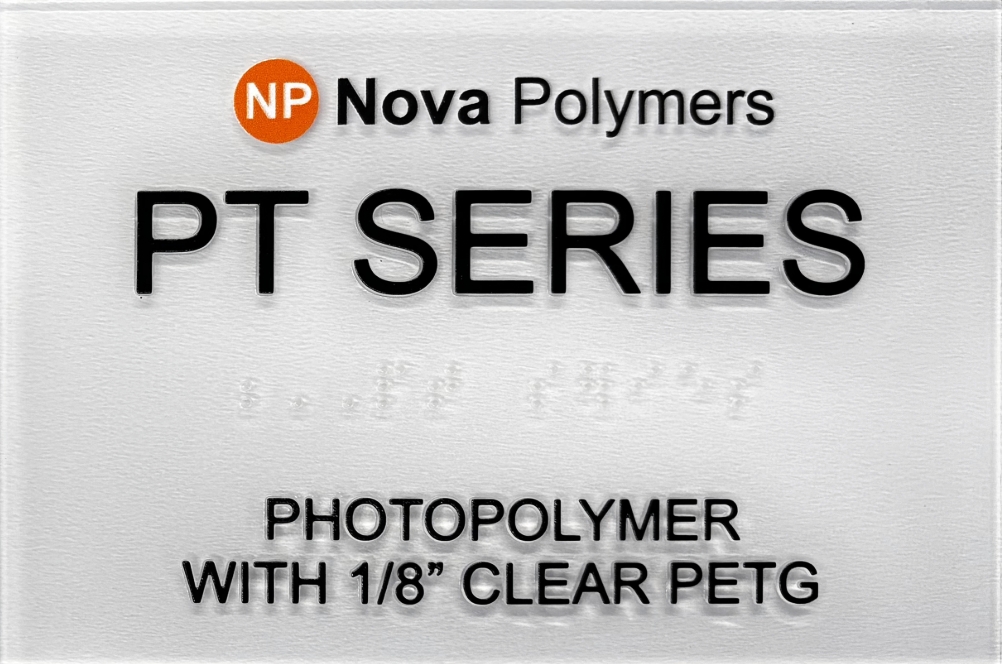
Novacryl photopolymer substrates are the core material in Nova Polymers’ ADA sign fabrication system. Nova Polymers has pursued third-party certification specifically to make Novacryl a credible specification for LEED projects.
Intertek Clean Air GOLD Certification
Nova Polymers holds Clean Air GOLD certification from Intertek for its Novacryl PT Series. This certification verifies that Novacryl products are manufactured in compliance with VOC emissions and low-emitting materials standards for CDPH, WELL, and LEED. Intertek’s Clean Air GOLD program is one of the recognized third-party certifications that satisfies the General Emissions Evaluation under LEED v4’s EQ Low-Emitting Materials credit.
For project teams, this means the documentation path is straightforward. Nova Polymers can provide the Clean Air GOLD certificate for inclusion in your LEED submittal package.
ADA Compliance and LEED Are Not in Conflict
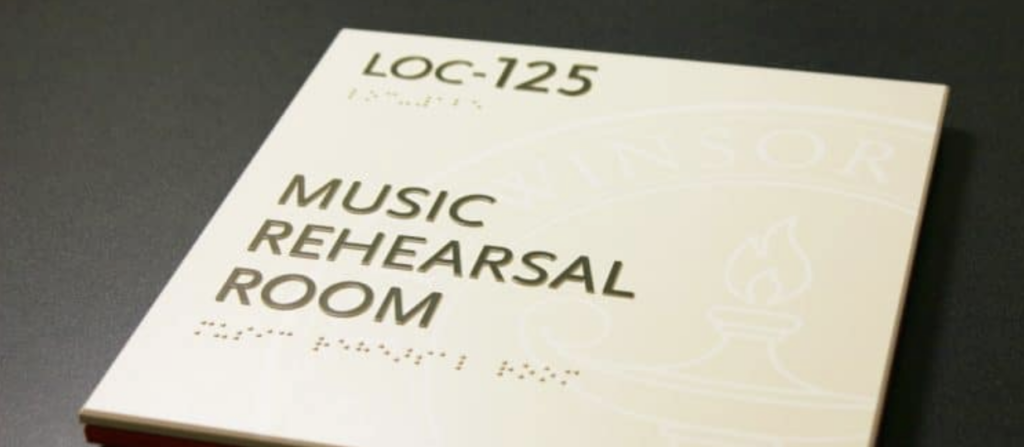
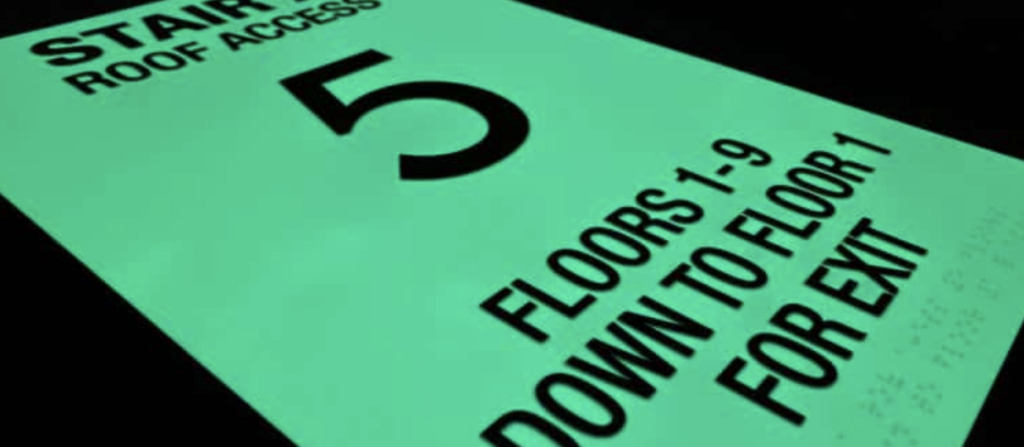
One concern architects sometimes raise is whether ADA-compliant signage, with its tactile requirements, Grade 2 Braille, and contrast specifications, can realistically be specified as LEED compliant signage material. The short answer is yes, and Novacryl is specifically designed to do both.
Photopolymer is the most widely used material for ADA interior signage. It is durable, tactile-contact resistant, and capable of meeting the contrast and character requirements set by the 2010 ADA Standards for Accessible Design. Novacryl’s certifications mean that choosing a material for ADA compliance does not require sacrificing LEED credit contribution. The two goals align.
What Documentation Is Available for LEED Submittals
Architects and project teams specifying Novacryl on LEED projects can access the following from Nova Polymers:
- Clean Air GOLD Certificate from Intertek, verifying compliance with CDPH, WELL, and LEED low-emitting materials requirements.
- Recycled content documentation for applicable Novacryl series, suitable for MR Credit submissions.
- LEED attribute information for Novacryl products is accessible through the Nova Polymers LEED resources page.
- BIM objects and specifications for design integration and coordination with the broader project documentation set.
If your project team needs specific product data sheets or additional certification documentation, Nova Polymers can provide those on request.
A Note on LEED v5 and Where the Standard Is Heading
LEED v5 is reshaping how material health is evaluated. The structural change, moving low-emitting materials performance into the Materials and Resources category, reflects a broader shift toward treating building products as holistic contributors to occupant health rather than isolated air quality concerns. Accessibility measures, including signage, are also becoming more prominent in the updated framework.
For architects working on projects that will pursue LEED certification in the years ahead, specifying LEED building materials with strong third-party credentials and transparent documentation is the right approach now. Products that meet v4.1 standards are generally well-positioned as v5 requirements mature.
Specifying Novacryl® on Your Next LEED Project
Nova Polymers provides BIM objects, product specifications, and LEED attribute resources specifically for architects. Novacryl substrates are available in a range of series to suit different design aesthetics, mounting requirements, and project budgets, and Nova Polymers maintains a network of preferred fabricators across North America who can produce compliant signage from those materials.
If you are working through LEED signage requirements for a current project, or want to understand how Novacryl’s certifications map to the credits you are pursuing, Nova Polymers’ team is available to walk through the specifics with you.