Creating accessible spaces is a fundamental responsibility for businesses and organizations. ADA sign compliance ensures that individuals with disabilities can navigate public spaces safely and independently. However, even minor oversights in signage design, placement, or manufacturing can result in non-compliance, leading to legal penalties and diminished accessibility. This blog explores common pitfalls in ADA sign compliance and how to avoid them.
Understanding ADA Sign Compliance
The Americans with Disabilities Act (ADA) sets clear guidelines for signage to ensure accessibility for individuals with visual, mobility, or cognitive impairments. These guidelines cover essential elements like tactile text, Braille, contrast ratios, and proper placement. Compliance is not just about meeting legal standards—it’s about creating inclusive spaces that welcome everyone.
Common Pitfalls in ADA Sign Compliance
Avoiding these frequent mistakes can save time, money, and legal complications:
- Improper Installation Height
Signs must be mounted between 48 and 60 inches from the ground to ensure visibility and reachability for all individuals, including wheelchair users. Incorrect placement is one of the most common compliance failures. - Missing or Incorrect Braille
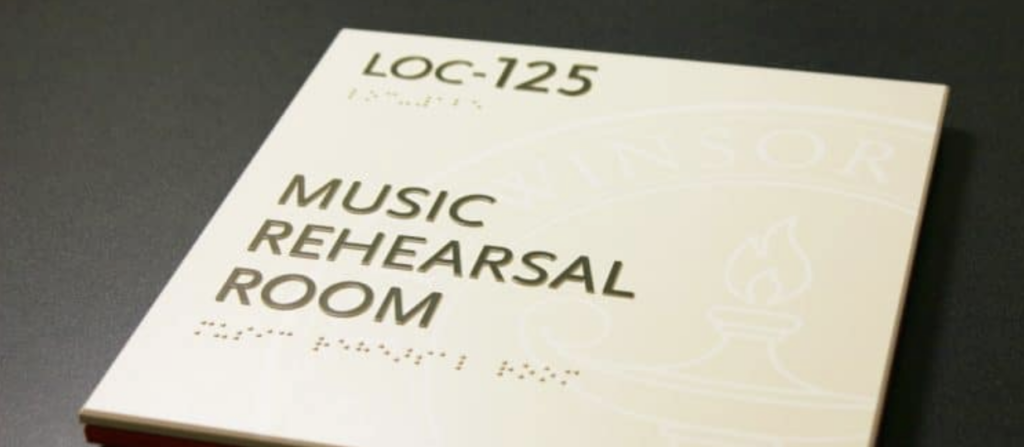
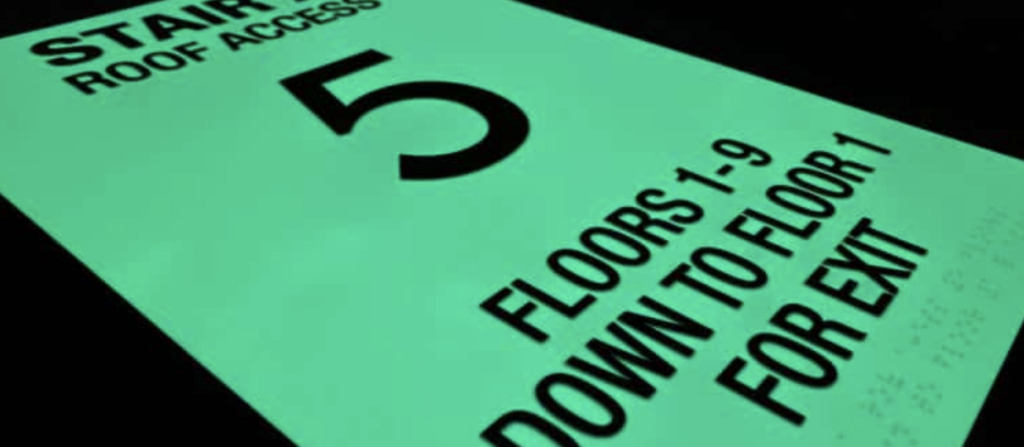
Grade 2 Braille is required on all tactile signs, and it must be positioned at least 3/8 inch below any text or symbols. Errors in braille positioning or spacing can render the signage ineffective. - Low Contrast and Glare
ADA signs must have a high contrast ratio (at least 70%) between text and background and a non-glare finish to ensure readability under various lighting conditions. - Inconsistent Placement
Placing signs haphazardly throughout a facility confuses users and undermines accessibility. Consistency in placement is key to effective wayfinding. - Incorrect Font or Lettering
Fonts must be sans serif, uppercase, and between 5/8 inch and 2 inches in height for tactile characters. Decorative fonts or improper sizing can lead to non-compliance. - Failure to Include Required Pictograms
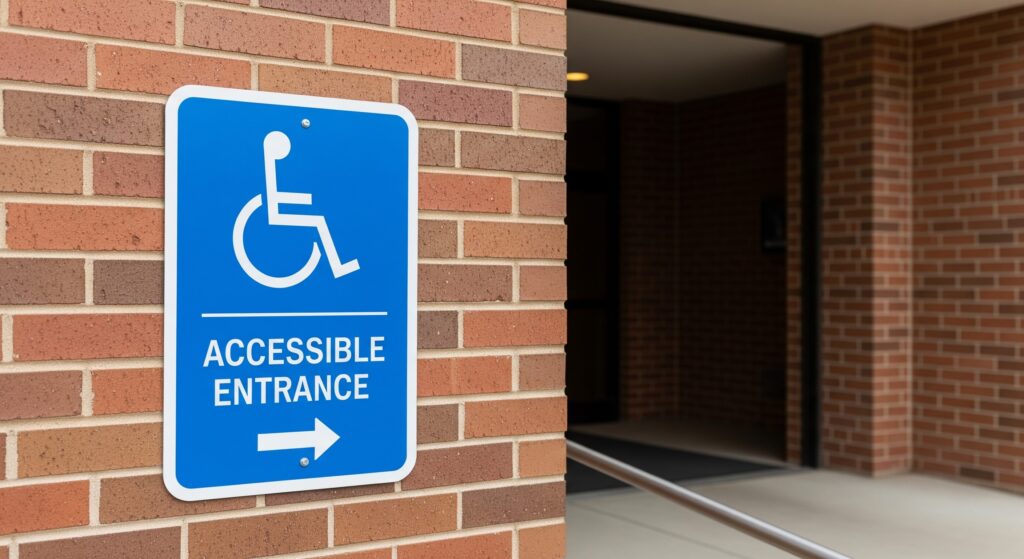
Pictograms like the International Symbol of Accessibility (ISA) must be included where applicable, accompanied by descriptive text and braille.
The Consequences of Non-Compliance
Non-compliance with ADA sign requirements can result in significant penalties, including:
- Legal fines or lawsuits
- Costly retrofitting of non-compliant signage
- Damage to your organization’s reputation
- Exclusion of individuals with disabilities from your space
Beyond these tangible consequences, failing to meet ADA standards sends a message of exclusion rather than inclusion.
Best Practices for Ensuring ADA Sign Compliance
- Double-Check Regulations: Stay updated on both federal ADA standards and any additional state or local requirements.
- Use Quality Materials: Invest in durable materials like photopolymer substrates that meet tactile and visual standards.
- Consult Experts: Partner with experienced professionals like Nova Polymers to ensure your signage meets all compliance requirements.
- Conduct Regular Audits: Periodically review your signage for wear-and-tear or changes in regulations.
Partner with Nova Polymers for Seamless ADA Sign Compliance
ADA sign compliance is not just about avoiding fines—it’s about fostering inclusivity and ensuring equal access for everyone. By understanding common pitfalls and adhering to best practices, businesses can create spaces that are both compliant and welcoming.
When it comes to ADA sign compliance, Nova Polymers is your trusted partner. As the leading provider of photopolymer substrates for ADA-compliant signage, we help architects and fabricators create durable, innovative solutions that meet every standard. From expert guidance on regulations to cutting-edge materials like the Novacryl® series, we’re here to simplify your compliance journey while enhancing your designs. Explore our resources today or contact us to see how we can support your next project.