Creating accessible spaces is not just about compliance; it’s about fostering inclusivity. Braille signage plays a crucial role in ensuring individuals with visual impairments can navigate public spaces independently. For architects and fabricators, understanding and implementing ADA braille signage requirements is essential to designing signs that truly make a difference. Nova Polymers, a leader in photopolymer braille signage solutions, partners with professionals to deliver innovative, compliant signage that meets these critical needs.
What Are ADA Braille Signage Requirements?
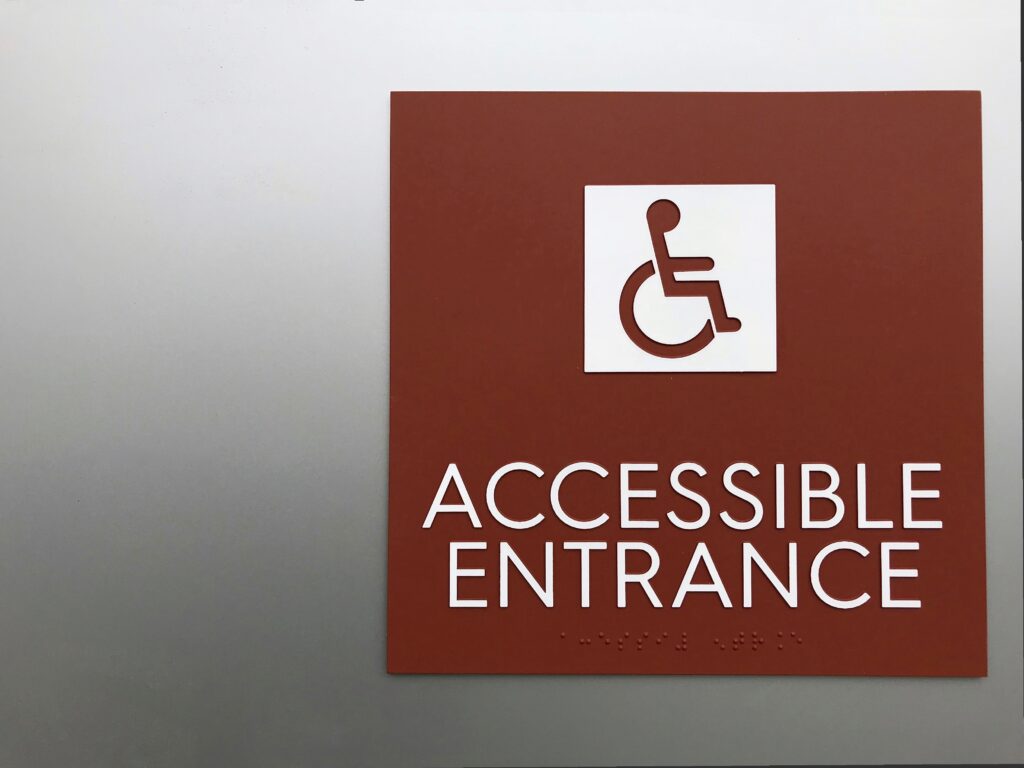
The Americans with Disabilities Act (ADA) sets forth strict guidelines for braille signage to ensure accessibility. Key requirements include:
- Braille Specifications:
- Grade 2 braille must be used.
- Braille dots must be domed for tactile readability. High contrast between text and background is mandatory.
- Positioning should place braille at least 3/8 inch below corresponding text and away from decorative elements.
- Text and Font Standards:
- Sans serif fonts are required.
- Lettering height must range between 5/8 inch and 2 inches, with proper spacing for readability.
- Contrast and Finish:
- High contrast between text and background is mandatory (e.g., dark text on a light background).
- Non-glare finishes are required to prevent visual strain.
- Mounting Guidelines:
- Signs must be placed between 48 and 60 inches from the ground.
- They should be easily accessible for individuals using wheelchairs or walkers.
Why Compliance Matters
Compliance with ADA braille signage requirements is more than a legal obligation—it’s a commitment to inclusivity. At its core, accessible signage reflects a commitment to equity, ensuring that people with visual impairments can navigate public spaces independently and with dignity. By prioritizing compliance, businesses, architects, and fabricators demonstrate their dedication to inclusivity, fostering environments where everyone feels valued.
Failing to meet ADA braille signage requirements can have serious consequences. Non-compliance often results in financial penalties, including fines or costly retrofitting to bring signage up to standard. Legal disputes stemming from accessibility violations can tarnish your reputation, leading to negative publicity and diminished trust among customers and stakeholders. Beyond the financial and legal risks, non-compliance sends a message of exclusion, which can alienate individuals with disabilities and impact your organization’s standing as a socially responsible entity.
Accessible signage also benefits individuals beyond those with disabilities. Clear, high-contrast text and non-glare finishes improve readability for all users, including those with aging eyes or temporary visual impairments. Thoughtfully designed signage enhances the overall user experience by making navigation intuitive and seamless for everyone who enters the space.
By adhering to ADA braille signage requirements, architects and fabricators not only fulfill their legal obligations but also contribute to a broader cultural shift toward universal design principles. This approach ensures that spaces are functional and accessible for diverse populations, reinforcing the idea that accessibility is not an afterthought but a fundamental aspect of design.
The Role of Photopolymer in ADA Braille Signage
Nova Polymers revolutionized the industry with its photopolymer substrates, such as the Novacryl® series. Photopolymer materials offer:
- Durability: Ideal for both interior and exterior use, even in high-moisture environments.
- Design Flexibility: Clear photopolymer allows for creative designs while maintaining compliance.
- Sustainability: Options like Novacryl® PT Series contribute to eco-friendly signage solutions.
By partnering with Nova Polymers, fabricators can streamline production processes while ensuring their signs meet or exceed all ADA requirements.
Best Practices for Architects and Fabricators
- Collaborate Early: Engage with experts like Nova Polymers during the design phase to ensure compliance from the start.
- Standardize Contrast: Maintain consistent color schemes throughout a building for better recognition.
- Leverage Training Resources: Take advantage of Nova Polymers’ free webinars and resources to stay updated on evolving standards.
- Invest in Quality Materials: Use certified photopolymer materials to guarantee long-lasting compliance.
Partner with Nova Polymers for Exceptional ADA Compliance
ADA-compliant braille signage is a cornerstone of accessible design, enabling individuals with disabilities to navigate spaces independently. By adhering to braille signage requirements and leveraging innovative solutions like photopolymer materials, architects and fabricators can create signs that truly make a difference. With Nova Polymers as your partner, you can combine compliance with creativity, delivering signage that stands out while meeting accessibility standards.
Ready to elevate your signage to meet the highest standards of ADA compliance and aesthetic appeal? Partner with Nova Polymers, the leading provider of photopolymer sign substrates and processing equipment in North America. Our innovative solutions, such as the Novacryl series, ensure that your braille signage requirements are not only met but exceeded.
Let us help you craft signs that make a difference—contact us today to discover how Nova Polymers can enhance your signage projects with cutting-edge photopolymer technology.