The Federal ADA signage guidelines can be challenging to navigate due to their complex and meticulous requirements. Nova Polymers aims to empower sign manufacturers with the education they need to ensure ADA compliance for each sign they ship. One of the most critical aspects of ADA-compliant signage is the proper placement of braille signs.
While there are countless layers to designing and fabricating signage, your most important task in this market is understanding the ADA signage requirements. One of the most common mistakes when fabricating signage is incorrect braille sign placement. The rules for braille sign placement outlined by the ADA are very specific, and mistakes can lead to fines of up to $75,000 per non-compliant sign. Here’s what you need to know about braille sign placement to reduce the risk of these penalties.
What Are Braille Signs?
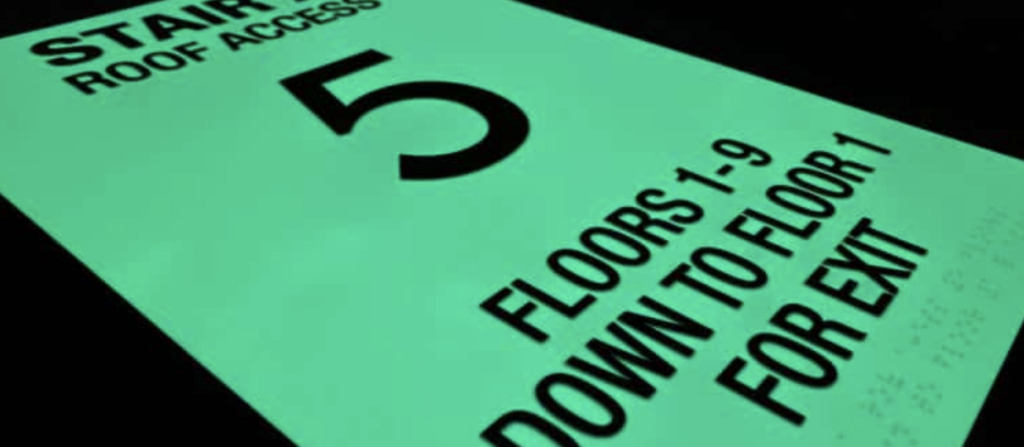
Braille signs are tactile signs designed for individuals with visual impairments. Specific to Braille, ADA signs use a series of raised dots to create patterns and symbols that represent the alphabet, though not in the exact same format. These signs allow blind individuals to read and interpret the information on signs by running their hands over the braille characters.
Braille signs are crucial for ensuring that signage remains accessible to everyone, regardless of their abilities. According to the ADA, all signage identifying a room, space, or area—whether public or employee-only—must include braille signs. The braille must comply with the Standards for Accessible Design, covering aspects such as the type of braille, spacing, dome shape, and placement.
Types of Braille
Braille comes in three grades: I, II, and III. ADA-compliant braille signs in the U.S. must use grade II braille, which includes 265 contractions and uses single characters to represent entire words or groups of letters. This improves the reading speed for visually impaired individuals.
Grade I braille is a style more for beginners, using reduced character choices. Grade III braille is shorthand and not suitable for braille signs. Thus, grade II braille is the standard for ADA-compliant braille signs.
Dimensions and Capitalization for Braille Signs
The ADA Standards specify the exact dimensions for braille signs to ensure they are tactile and easily readable. Braille signs must have domed or rounded dots with the following measurements:
- Dot Height: 0.025 – 0.037 inches
- Dot Diameter: 0.059 – 0.063 inches
- Spacing Between Dots: 0.090 – 0.100 inches
- Vertical Cell Spacing: 0.395 – 0.400 inches
- Horizontal Cell Spacing: 0.241 – 0.300 inches
Additionally, braille signs must use lowercase braille characters unless the first letter of a sentence, proper noun, or acronym needs to be capitalized. It’s also important to check for local laws, such as California’s stricter regulations on braille signs, which may impact the fabrication process.
Proper Positioning and Spacing
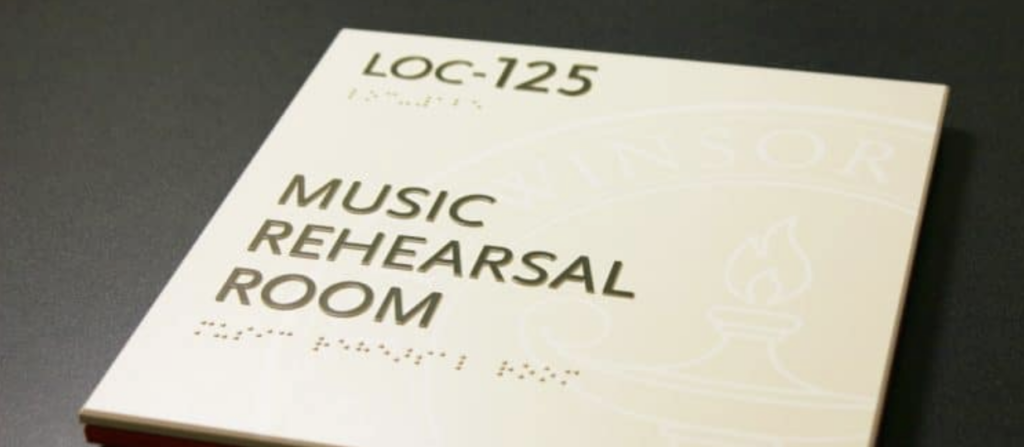
The proper positioning and spacing of braille signs are essential for ADA compliance. Braille must always be placed below its corresponding text and be separated by at least 3/8 inch from other tactile characters or decorative elements. For elevator controls, the minimum spacing is 3/16 inch. Misplacing braille sign location can lead to misinterpretation and non-compliance.
How to Ensure Your Braille Signs Are Compliant
Proper braille placement is key to avoiding costly fines and lawsuits. To ensure compliance, sign fabricators should use high-quality sign design software that automates braille sign placement, reducing the chances of human error. Investing in the right tools will help you consistently produce ADA-compliant braille signs and improve your overall workflow.
Key Takeaways for Sign Compliance
Compliance with ADA regulations for braille signs is critical for sign manufacturers. The precise rules governing braille sign placement, type, and dimensions mean that fabricators need to stay informed to avoid common mistakes. Despite the complexity, mastering the production of braille signs can lead to greater profitability, especially as many businesses choose to subcontract this task.
At Nova Polymers, we can help you solve your braille signs compliance challenges with innovative solutions tailored to your needs. Contact us to learn how we can assist you in confidently producing 100% ADA-compliant braille signs.