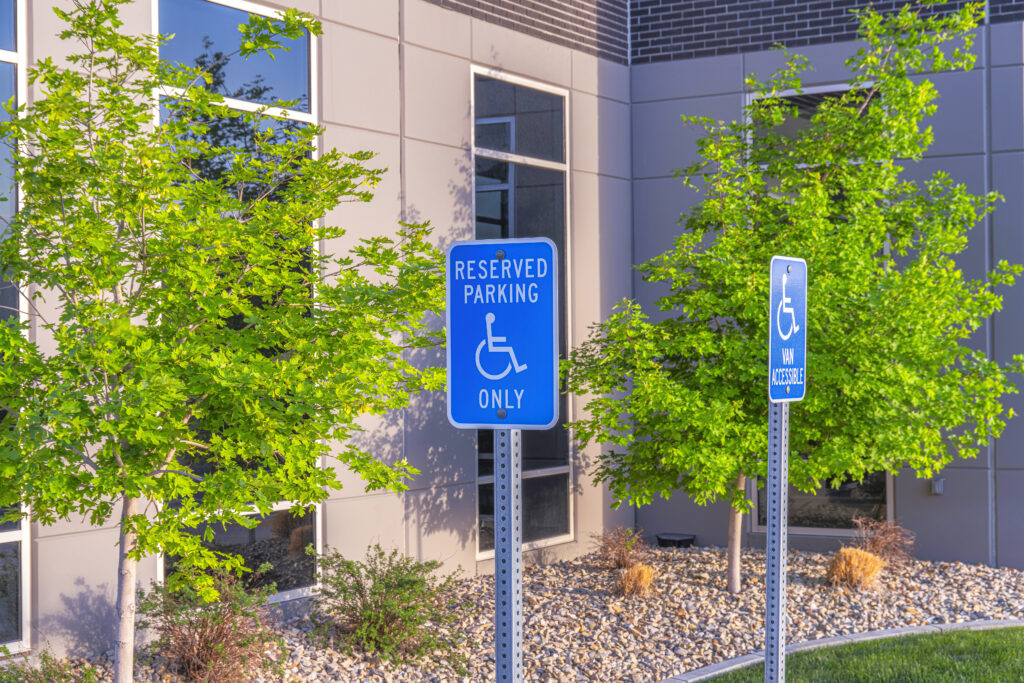
Navigating urban environments can be challenging, especially for individuals with disabilities. Effective urban wayfinding ensures that every person, regardless of their abilities, can confidently find their way in cities, parks, campuses, and public spaces. A key component of successful wayfinding is the use of inclusive, ADA-compliant signs.
What Is Urban Wayfinding?
Urban wayfinding refers to the system of signs, maps, and other visual or tactile cues designed to help people navigate complex environments. It goes beyond simple directions, aiming to create a seamless experience for all users by:
- Guiding individuals through unfamiliar areas.
- Providing clear and concise information.
- Supporting accessibility for people with visual, hearing, or cognitive impairments.
Inclusive urban wayfinding not only improves accessibility but also enhances the overall experience of urban spaces by making them more welcoming and navigable.
Why Inclusive Wayfinding Matters
Cities and public spaces serve diverse populations with varying needs. Inclusive urban wayfinding ensures that everyone can interact with and enjoy these spaces equally. For example:
- Individuals with visual impairments benefit from Braille and tactile signs.
- Deaf or hard-of-hearing individuals rely on clear visual indicators.
- People with cognitive disabilities appreciate simple language and intuitive symbols.
By incorporating these elements, urban wayfinding systems foster inclusivity and compliance with the Americans with Disabilities Act (ADA).
Key Elements of ADA-Compliant Wayfinding Signs
Designing ADA-compliant signs for urban wayfinding requires attention to specific guidelines to ensure accessibility. Key features include:
1. Readable Text and Fonts
- Use sans-serif fonts like Arial or Helvetica for clarity.
- Ensure the text size is large enough to read from a distance.
- Provide high contrast between text and background.
2. Tactile and Braille Elements
- Include raised letters and Grade 2 Braille for individuals who are blind or have low vision.
- Place tactile signs at an accessible height of 48 to 60 inches above the floor.
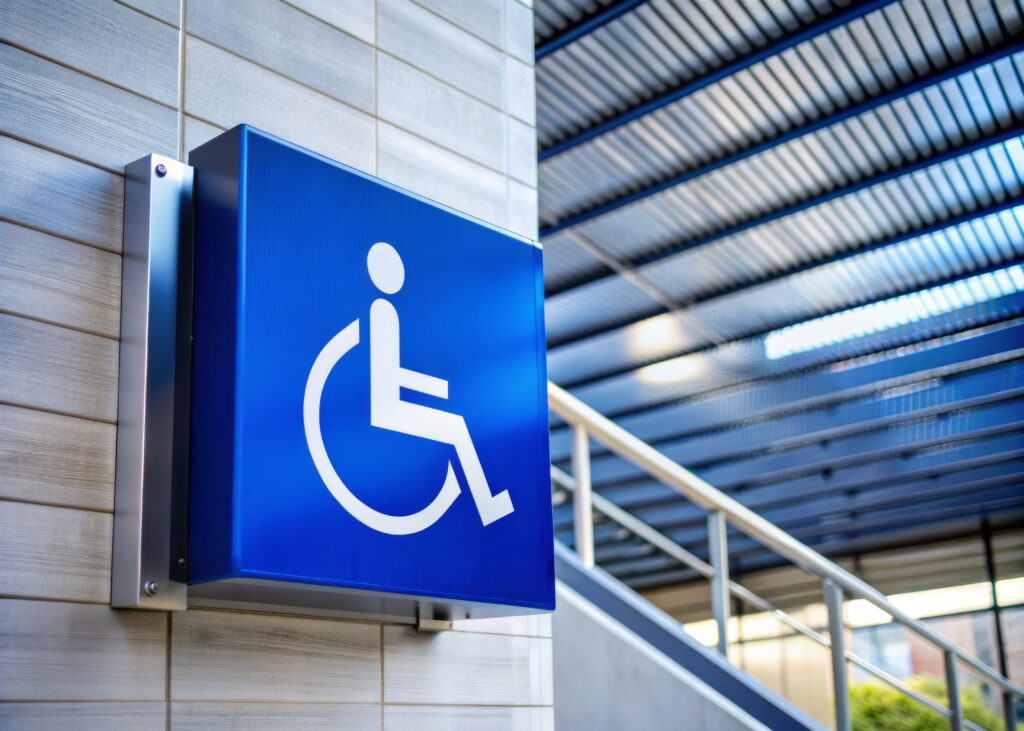
3. Pictograms and Universal Symbols
- Use easily recognizable symbols to communicate information quickly.
- Ensure symbols meet ADA standards for size and clarity.
4. Directional Arrows
- Provide clear and consistent directional arrows to guide users.
- Use arrows with contrasting backgrounds for better visibility.
5. Lighting and Visibility
- Ensure signs are well-lit, especially in low-light conditions.
- Use non-glare finishes to improve readability.
Examples of Urban Wayfinding in Action
Cities and organizations worldwide are embracing urban wayfinding to improve navigation for everyone. Some notable examples include:
- Public Transit Systems: Clear signage at train stations and bus stops with Braille, tactile maps, and multilingual text.
- Parks and Recreation Areas: Directional signs with high-contrast colors and tactile features.
- University Campuses: Comprehensive wayfinding systems that include ADA-compliant directories, path markers, and building identifiers.
The Role of Technology in Urban Wayfinding
Modern technology is enhancing traditional wayfinding systems. Interactive kiosks, mobile apps, and digital signage provide real-time navigation assistance. Many of these technologies are designed with accessibility in mind, offering features like screen readers, voice-guided directions, and customizable interfaces.
Benefits of Inclusive Urban Wayfinding
Investing in inclusive urban wayfinding delivers numerous benefits, including:
- Enhanced Accessibility: Ensures equal access to public spaces for all individuals.
- Improved Safety: Reduces confusion and potential hazards by providing clear navigation cues.
- Increased Engagement: Encourages more people to explore urban areas confidently.
- Compliance with Regulations: Meets ADA requirements, avoiding legal and reputational risks.
How to Implement Effective Urban Wayfinding Systems
To create an inclusive urban wayfinding system, consider these steps:
- Conduct Accessibility Audits: Assess current signage and identify gaps in accessibility.
- Engage Stakeholders: Collaborate with disability advocates, urban planners, and designers.
- Use ADA Guidelines: Ensure all signs meet the latest ADA standards.
- Incorporate Feedback: Test wayfinding solutions with diverse user groups.
- Leverage Technology: Integrate digital tools to complement physical signs.
Partner with Nova Polymers for Urban Wayfinding Signage
Urban wayfinding plays a crucial role in making cities more inclusive and accessible. By using ADA-compliant signs and embracing thoughtful design, communities can create environments where everyone feels welcomed and empowered to navigate with ease. As urban spaces continue to grow, prioritizing inclusive wayfinding will be key to fostering connection and accessibility for all. Explore how you can enhance your urban wayfinding systems today and ensure your community is navigable for everyone.
Architects, take your urban wayfinding projects to the next level with Nova Polymers. Our innovative materials and expertise in ADA-compliant signage help create inclusive environments that meet the highest standards. Partner with us to design and implement signage solutions that make a difference.